Fort Lauderdale, FL (FTL)
Fort Lauderdale Amtrak/Tri-Rail Station (FTL) is a historic rail depot built in 1926 in a charming Mediterranean Revival design. Today it serves both Amtrak long-distance trains and Tri-Rail commuter service, offering parking, transit connections, and easy access to Fort Lauderdale–Hollywood International Airport. The station is located at 200 SW 21st Terrace, Fort Lauderdale, FL 33312, with nearby connections to Broward County Transit routes.
Fort Lauderdale, FL (FTL) Amtrak Station Guide
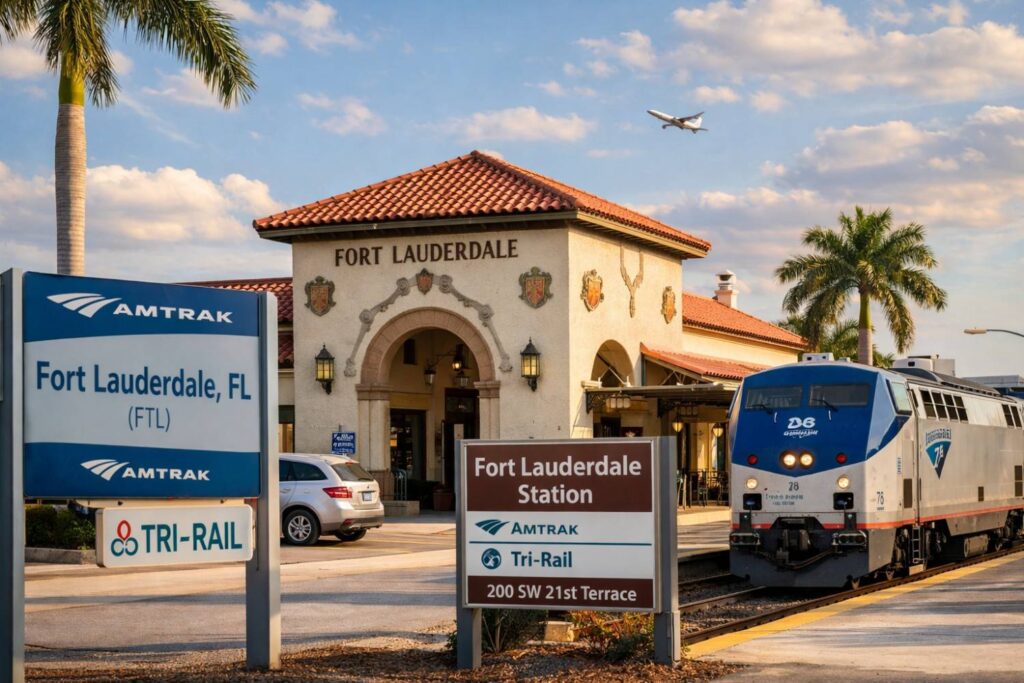
Fort Lauderdale’s Amtrak station (code: FTL) is more than a travel stop — it’s a piece of South Florida history. Originally built by the Seaboard Air Line in 1926, the station reflects a time when Florida rail travel helped transform coastal towns into booming cities. The depot was designed in the Mediterranean Revival style, known for its stucco finish, red tile roof, and decorative architectural details.
Today, this station functions as a shared hub for Amtrak intercity trains and Tri-Rail commuter trains, with connecting transit routes and convenient airport proximity — making it a key transportation gateway for locals and visitors alike.
Station Location & Address
Fort Lauderdale Amtrak Station (FTL)
📍 200 Southwest 21st Terrace, Fort Lauderdale, FL 33312
The station sits near major roads, including easy access from I-95, and it’s positioned close to Fort Lauderdale–Hollywood International Airport, which is helpful for travelers connecting between air and rail.
Quick Station Facts (Table)
| Category | Details |
|---|---|
| Station Name | Fort Lauderdale Amtrak/Tri-Rail Station |
| Station Code | FTL |
| Address | 200 SW 21st Terrace, Fort Lauderdale, FL 33312 |
| Built | 1926 |
| Architectural Style | Mediterranean Revival |
| Main Services | Amtrak + Tri-Rail |
| Parking | Park & ride lot available |
| Transit Connections | Tri-Rail + Broward County Transit |
| Annual Ticket Revenue (FY 2024) | $4,291,929 |
| Annual Ridership (FY 2024) | 42,586 |
Architecture & Historic Significance
The Fort Lauderdale depot is admired for its classic South Florida look, inspired by European coastal architecture. The building’s stucco exterior, hipped red tile roof, and decorative entry features (including shields, wreath elements, and scrollwork) are hallmarks of Mediterranean Revival style — popular across Florida during early 20th-century development.
This station represents the era when railroads were Florida’s main driver of growth, supporting migration, commerce, and tourism.
Restoration & Renovations
Fort Lauderdale’s station has seen multiple improvements over the decades:
- Early 1980s: major restoration work
- 1986: improvements completed by South Florida’s regional transportation authority
- 2014 renovation program: upgrades included weatherproofing, improvements in the lobby and ticket counter areas, plus accessibility enhancements (ADA-related work).
These updates helped preserve the building while improving passenger comfort and safety.
Train Services at Fort Lauderdale (FTL)
Amtrak Service
Fort Lauderdale is served by long-distance Amtrak trains running through Florida’s East Coast routes. Travelers can connect to major cities across Florida and onward to other states (depending on route schedules). For schedules and booking, passengers are directed to Amtrak’s official channels.
Tri-Rail Service
Tri-Rail is a popular commuter train system that helps travelers move around South Florida efficiently, including access toward Miami and West Palm Beach areas.
Transportation & Connections
One of the biggest advantages of Fort Lauderdale (FTL) is how easy it is to connect onward travel.
Local Transit Options
The station includes transit links such as:
- Tri-Rail commuter trains
- Broward County Transit
- Links shared through community resources including Miami-Dade Transit info for regional travel planning
Driving & Parking
Drivers can use the park-and-ride parking area, and Tri-Rail notes the station is accessible from I-95.
About Fort Lauderdale: A Brief History
Fort Lauderdale’s story reflects Florida’s broader development timeline. Indigenous communities lived along the New River area for thousands of years, but major settlement growth accelerated later with improved transport. The area experienced early military fort activity in the 1800s and saw growth surges tied to rail expansion and real estate booms. World War II also played a major role, with regional military operations boosting the area’s infrastructure and population.
Today, Fort Lauderdale is internationally recognized for beaches, canals, cruise travel, and tourism — and rail service remains part of its transportation backbone.
Helpful Community & Travel Links
| Type | Official Resource |
|---|---|
| City Info | City of Fort Lauderdale |
| Commuter Rail | Tri-Rail |
| Local Transit | Broward County Transit |
